Direct answer
Which leather is used to make cricket balls?
Traditional leather cricket balls use a natural leather outer cover. In conventional manufacturing, this leather is commonly prepared from cattle hide, although the precise source, grade and preparation can vary between manufacturers and ball models. The source alone does not determine quality—the grain, thickness, tanning, cutting, shaping, stitching and finish also matter.
Key facts
- Natural leather is traditionally used for the outer cover
- Alum-tanned leather is used in many recognised four-piece cricket balls
- The outer cover may contain two or four shaped pieces of leather
- Leather quality is only one part of the ball’s complete construction
Traditional cricket balls use a natural leather outer case fitted over a wound core. In conventional manufacturing, the prepared leather commonly comes from cattle hide. However, manufacturers do not always publish the precise material source used for every model.
Before it becomes a cricket-ball cover, the hide must be tanned, selected for suitable thickness and grain, cut into shaped pieces and moulded into curved sections. Many recognised cricket balls use alum-tanned leather, but the precise tanning and finishing process can differ between manufacturers and product grades.
A good leather cover should be reasonably consistent in thickness, free from serious surface defects and suitable for shaping and stitching. However, leather alone cannot guarantee a good ball. The core, winding, balance, seam, stitching, finish and quality control all contribute to its final performance.
A cricket ball is often described simply as a “leather ball,” but that phrase does not explain the quality or preparation of its cover.
Two balls can both use genuine leather and still differ significantly in shape retention, seam stability, finish and playing life. One may use carefully selected and evenly prepared leather, while another may have inconsistent thickness, loose grain or an unsuitable finish.
Understanding the animal source is useful, but buyers should also consider how the leather was selected, tanned, cut, shaped, stitched and combined with the rest of the ball.
In this article14 sections
What is the source of cricket-ball leather?
Traditional cricket balls use a natural leather outer cover. In conventional ball manufacturing, cattle-derived leather is commonly used because suitable sections can provide the strength, grain and shaping properties required for the cover.
The MCC Laws require a traditional cricket ball to have a leather case, but they do not prescribe one particular animal source, breed, leather grade or tanning process for every ball. Those details depend on the manufacturer and intended product specification.
Not every company publishes the precise source of the leather used in every model. It is therefore better to describe the material carefully rather than assume that all leather cricket balls use exactly the same type or grade.
Before it becomes a cricket-ball cover, the hide is preserved, tanned, selected and prepared. Suitable sections are then cut and shaped for manufacturing.
| Term | What it describes | Why it matters |
|---|---|---|
| Natural leather | The material used for the traditional outer cover | Provides a firm cover that can be shaped, stitched and finished |
| Full-grain leather | Leather retaining its natural outer grain | Can offer a strong surface when properly selected and prepared |
| Alum-tanned leather | Leather prepared using an aluminium-salt-based tanning process | Used in many traditional and premium cricket balls |
| Leather thickness | How thick and consistent the prepared cover is | Can affect shaping, wear and weight distribution |
| Finish or coating | The protective and coloured surface treatment | Affects appearance, surface protection and how the ball wears |
| Two-piece or four-piece | The number of shaped leather sections in the outer cover | Influences construction and the arrangement of the seams |
Manufacturers may use these terms differently, so check the specification of the individual product.
What does alum-tanned leather mean?
Tanning changes preserved animal hide into leather that can be shaped, stitched and used more reliably.
Alum tanning uses aluminium salts as part of the leather-preparation process. Many established cricket-ball manufacturers describe their four-piece balls as being made from alum-tanned leather.
This does not mean that every alum-tanned ball is automatically high quality. The result also depends on the original hide, selection of the leather, consistency of thickness, tanning control, cutting, shaping and finishing.
Waterproofing or additional surface treatment should also not be confused with tanning. A manufacturer may alum-tan the leather and apply further treatments or finishes to improve surface protection.
Source Note
Example: SG Bouncer Cricket Leather Ball is officially described as a four-piece ball made from alum-tanned leather.

How is leather selected for a cricket ball?
Not every part of a hide has identical grain, thickness, strength or elasticity. Manufacturers must inspect the prepared leather and select sections appropriate for the intended ball grade.
Important checks can include:
- Consistency of thickness
- Grain condition
- Flexibility and firmness
- Visible cuts, scars or weak areas
- Ability to hold its moulded shape
- Suitability for stitching and finishing
- Weight contribution to the completed ball
The leather pieces must also be cut and shaped consistently. Unequal pieces or uneven thickness can make it harder to produce a balanced, round ball.
Premium leather cannot compensate for a poorly made core or uneven stitching, but unsuitable leather can limit the quality of an otherwise well-constructed ball.
How does the leather become a cricket-ball cover?
After suitable leather has been selected, it is cut into the required shapes and formed into curved sections.
In a four-piece ball, four shaped leather pieces create two cups. The pieces within each cup are joined along their quarter seams. The two completed cups are then placed around the wound core and connected by the main stitched seam.
A two-piece ball uses two shaped leather sections rather than four. This construction is commonly found in lower-priced practice and training balls.
Once stitched, the ball is shaped and finished before its weight, circumference, balance, roundness, seam and external appearance are checked.
The precise manufacturing sequence varies between companies and ball grades, but leather selection, shaping and stitching remain central to traditional cricket-ball construction.
| Leather characteristic | Possible effect on the ball |
|---|---|
| Consistent thickness | Supports more even shaping and weight distribution |
| Firm, suitable grain | Helps the cover withstand repeated contact and abrasion |
| Correct moulding | Helps create a round and balanced outer shape |
| Accurate cutting | Helps the leather pieces meet consistently at their seams |
| Suitable tanning | Prepares and stabilises the hide for manufacturing and use |
| Appropriate finish | Protects the surface and affects colour, shine and wear |
| Strong stitching | Holds the leather sections around the wound core |
No single material characteristic guarantees swing, seam movement, bounce or durability.
Does better leather make a better cricket ball?
Better leather can contribute to a better ball, but it is not the only requirement.
The final result depends on the complete construction:
- Core quality and balance
- Thread or yarn winding
- Leather selection and preparation
- Accuracy of cutting and shaping
- Stitching tension and seam consistency
- Surface finish
- Final weight and circumference
- Roundness and balance
A ball made from good leather can still perform poorly if its core is unbalanced, its winding is inconsistent or its stitching is uneven. Similarly, a strong core cannot fully compensate for weak or badly prepared cover material.
For this reason, cricket balls should be assessed as complete products rather than judged only by claims such as “genuine leather” or “premium leather.”
Does the colour change the type of leather?
Red, white and pink cricket balls may all use genuine leather, but their colouring, surface preparation and finishing systems can differ.
The colour itself does not identify the animal source or prove the grade of the leather. A white ball is not necessarily made from a different animal hide than a red ball.
Different finishes can affect visibility, shine retention and the way a ball’s surface wears. However, actual behaviour also depends on the manufacturer, construction, playing surface, weather and care.
When comparing coloured balls, consider the complete product specification rather than assuming that colour alone determines quality or performance.
Caution
“Genuine leather” does not tell the complete story
The phrase “genuine leather” confirms very little about the leather’s grade, grain, thickness, tanning, consistency or suitability for cricket-ball manufacturing.
Before buying, also check the ball’s weight, construction, number of leather pieces, stitching, intended use, playing surface and manufacturer information.
For match use, confirm that the product’s weight, circumference, colour and other specifications meet the applicable competition rules.
How SVB Sports uses leather in cricket-ball manufacturing
SVB Sports manufactures leather cricket balls in Meerut for different levels of practice and match play.
Leather is selected and prepared according to the intended ball specification. During manufacturing, attention is given not only to the cover but also to the core, winding, cutting, shaping, stitching, seam, weight, roundness and finish.
SVB’s range includes two-piece and four-piece leather balls for different player categories and playing requirements. Individual product pages identify the construction, weight, stitching method, colour and intended use of each ball.
This allows buyers to compare complete specifications instead of relying only on a general “leather ball” description.
Made in Meerut
Explore SVB Leather Cricket Balls
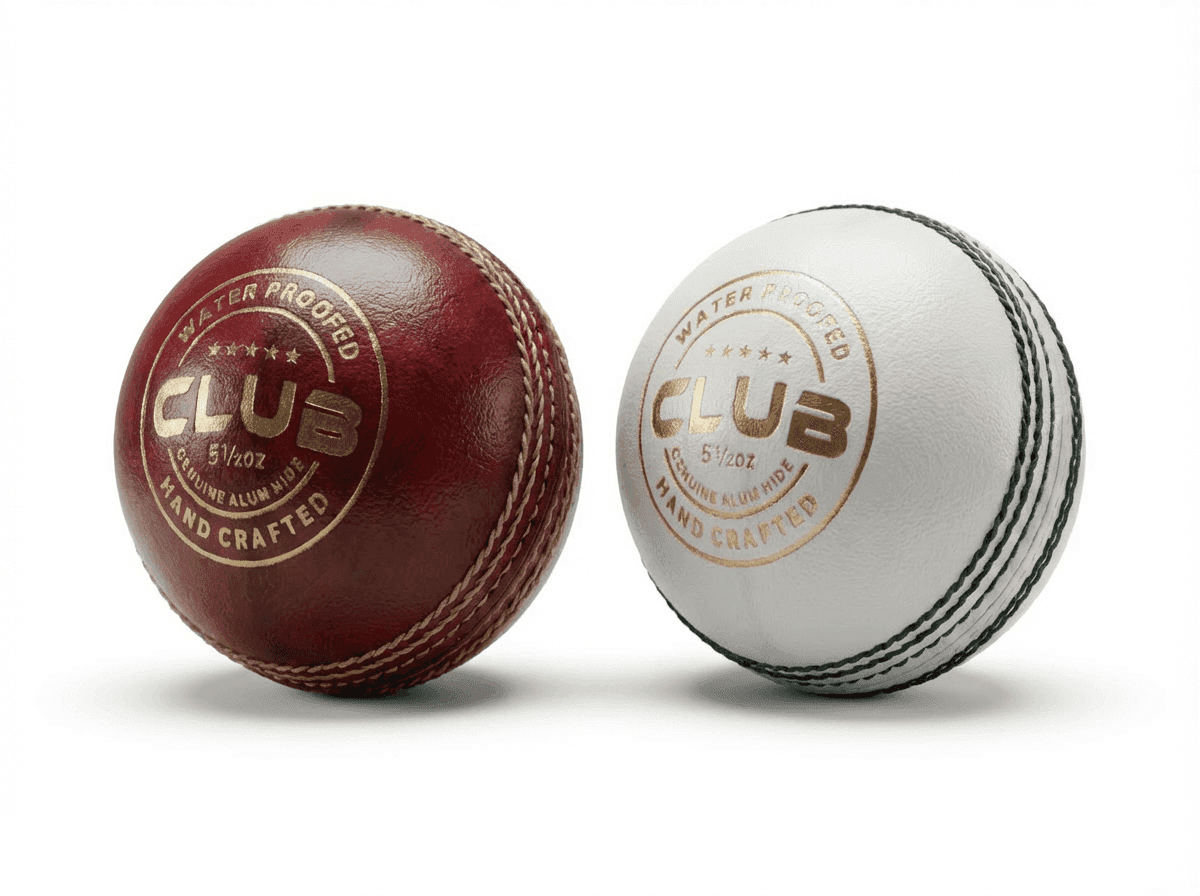
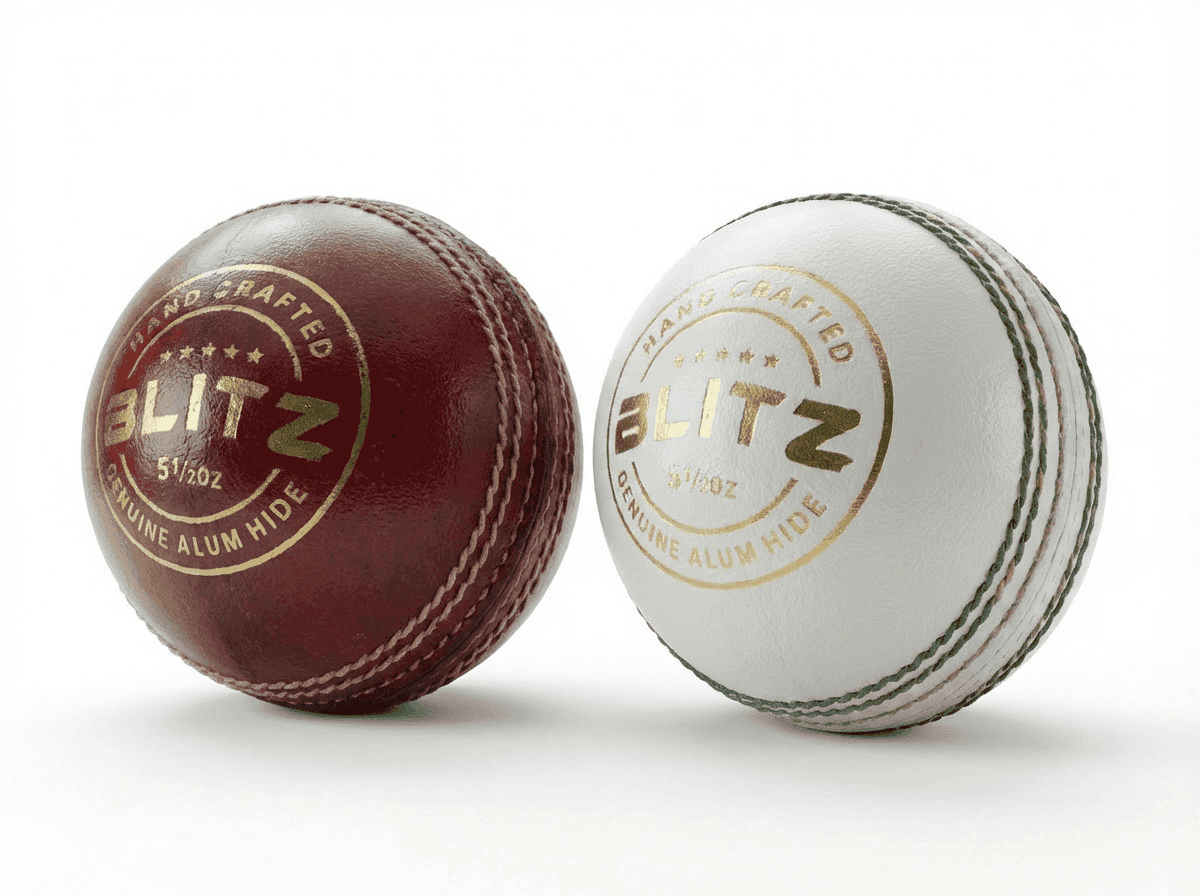
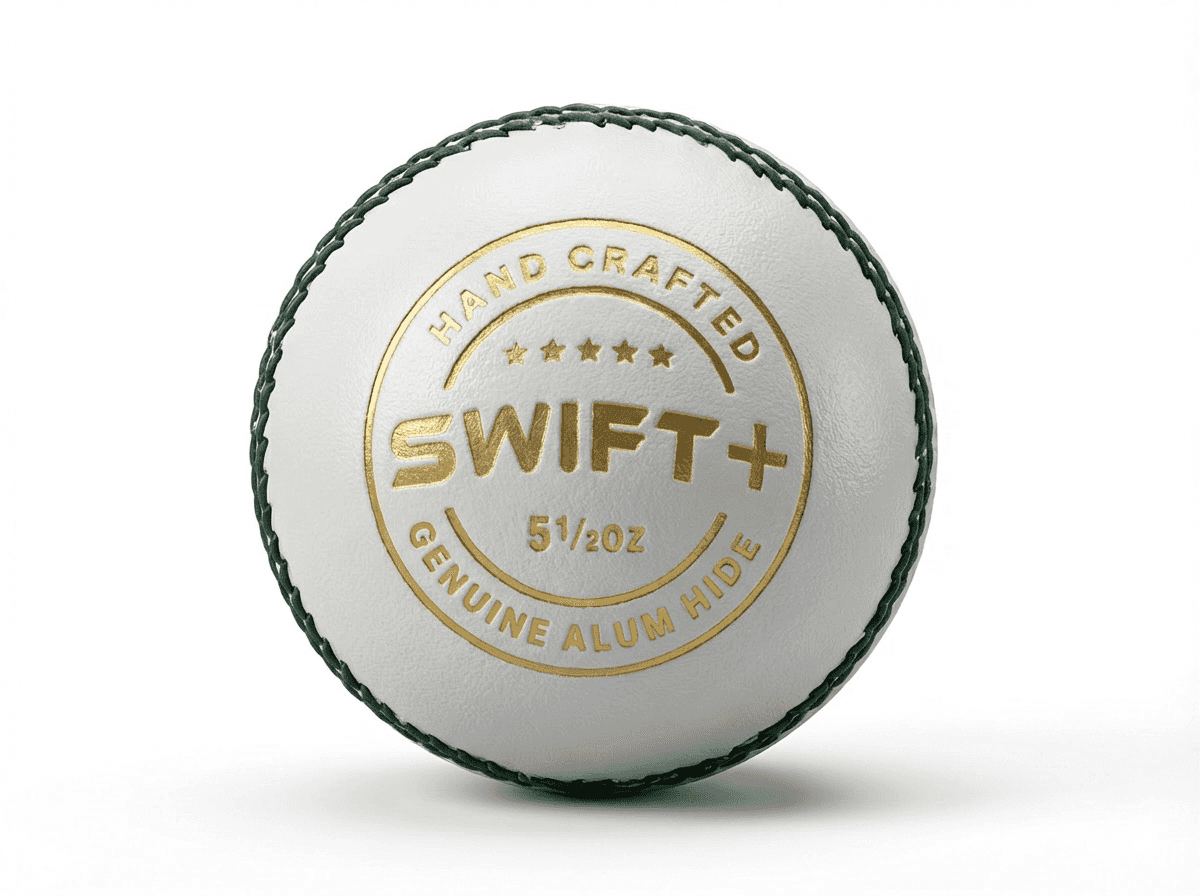
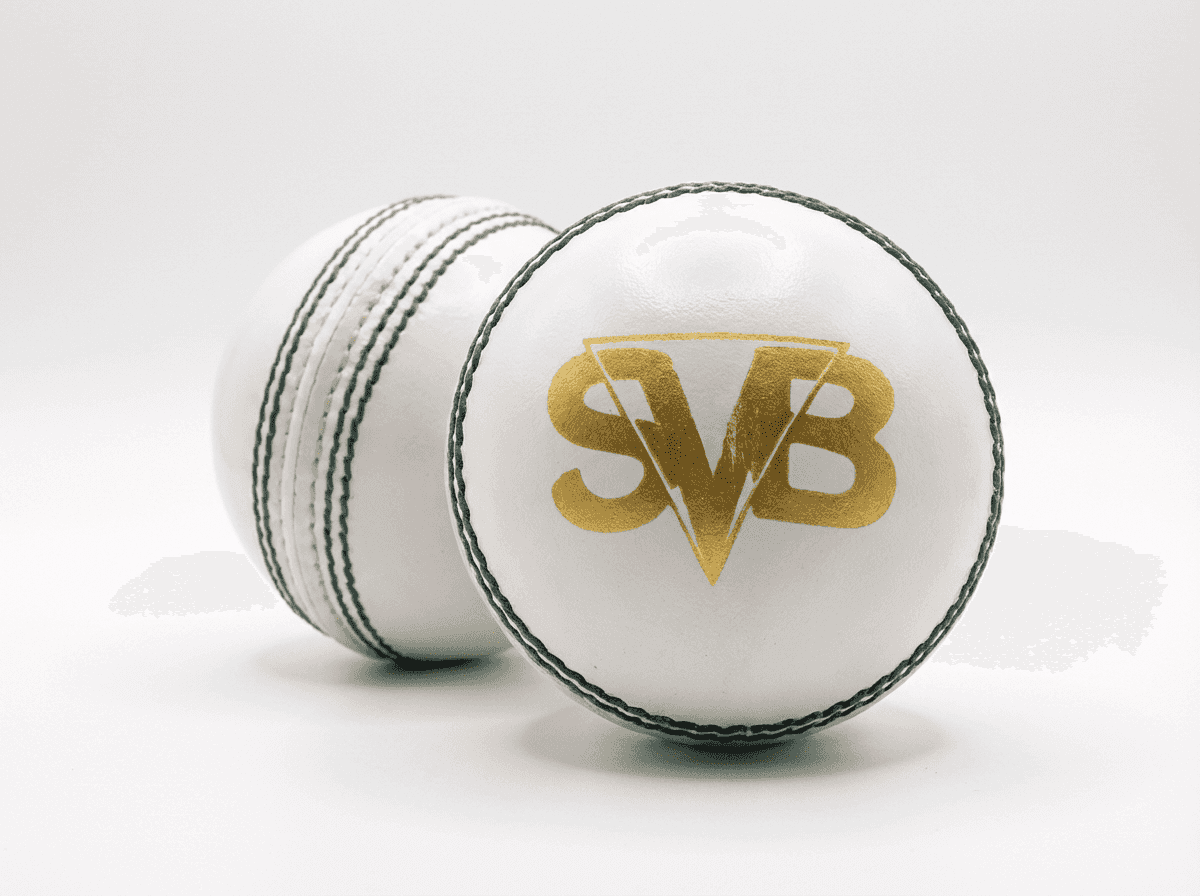
Compare leather cricket balls by weight, construction, colour, stitching, playing use and pack size to choose an appropriate option for practice, academy training, club cricket or matches.
Key Takeaways
- 1Traditional cricket balls commonly use a natural leather outer cover.
- 2Cattle-derived leather is widely used in conventional manufacturing, but the exact source, grade and preparation can vary.
- 3Alum-tanned leather is used in many recognised four-piece cricket balls.
- 4Leather must be selected, cut, shaped, stitched and finished before it becomes a cricket-ball cover.
- 5The complete construction—not leather alone—determines the quality and suitability of a cricket ball.
Asking which leather is used is a useful starting point, but it should not be the final buying test. A well-made cricket ball depends on the leather, core, winding, stitching, seam, finish, balance and quality checks working together.
FAQ
Questions About Cricket-Ball Leather
Question 1
What type of natural leather is commonly used for cricket balls?
Question 1
What type of natural leather is commonly used for cricket balls?
In conventional cricket-ball manufacturing, the outer cover is commonly prepared from cattle-derived leather. The precise material source, leather grade and preparation can vary, and manufacturers do not always publish these details for every model.
Question 2
Do all leather cricket balls use exactly the same material?
Question 2
Do all leather cricket balls use exactly the same material?
No. Traditional cricket balls use a leather outer case, but the material source, grain, thickness, tanning, finish and overall quality can vary between manufacturers and product models. Synthetic and other practice-ball materials are also available.
Question 3
What is alum-tanned leather?
Question 3
What is alum-tanned leather?
Alum-tanned leather is hide prepared using aluminium salts as part of the tanning process. It is used in many recognised cricket balls, particularly traditional four-piece models. Final quality still depends on the hide, tanning control, cutting, shaping, stitching and finish.
Question 4
What does full-grain leather mean?
Question 4
What does full-grain leather mean?
Full-grain leather retains the natural outer grain of the hide. When properly selected and prepared, it can provide a strong surface for a cricket-ball cover. The term alone does not guarantee the quality of the completed ball.
Question 5
What is inside a leather cricket ball?
Question 5
What is inside a leather cricket ball?
A traditional leather cricket ball generally contains a central core surrounded by tightly wound layers of thread or yarn. Shaped leather pieces are fitted and stitched around this construction to form the outer cover and main seam.
Question 6
Is a four-piece ball made from better leather than a two-piece ball?
Question 6
Is a four-piece ball made from better leather than a two-piece ball?
Not necessarily. Four-piece balls are commonly selected for higher-level practice and matches, while two-piece balls are often used for affordable regular training. The actual quality depends on the leather, core, winding, stitching, finish and manufacturing consistency.
Question 7
Are red and white cricket balls made from different leather?
Question 7
Are red and white cricket balls made from different leather?
They can use similar types of genuine leather, while their colouring, surface preparation and finish may differ. The exact material and process depend on the manufacturer and product model.
Question 8
How can I check the leather quality of a cricket ball?
Question 8
How can I check the leather quality of a cricket ball?
Look for consistent grain and finish, even shaping, a balanced round form, firm stitching and a well-formed seam. Also review the manufacturer’s stated leather, construction, weight and intended use rather than relying only on the words “genuine leather.”

Written by
SVB Sports
Author at SVB Sports
Previous article
How Long Does a Cricket Ball Last? Complete Durability Guide
Next article
Two-Piece vs Four-Piece Cricket Balls: What Is the Difference?
Tags