
Direct answer
What is a cricket leather ball?
A cricket leather ball has a cork-based core wrapped with tightly wound thread and covered with stitched leather panels. Its core, leather, seam, stitching and finish work together to influence grip, swing, bounce and durability.
Key facts
- Made with a cork-based core, thread winding and leather cover
- Commonly available in two-piece and four-piece construction
- Men’s cricket balls must weigh 155.9–163g when new
- Performance depends on construction, seam, leather and playing conditions
A leather cricket ball is built in several layers. A cork-based inner core provides weight and rebound, tightly wound thread helps create shape and firmness, and stitched leather panels form the outer cover and raised seam.
Many quality cricket balls combine machine-assisted shaping with skilled hand stitching. The final performance depends not only on the materials but also on the balance of the core, tightness of the winding, leather thickness, seam construction and quality of the finish.
Cricket leather balls are made in different colours, weights and constructions for different player categories, match formats, playing surfaces and levels of use.
In this article23 sections
A cricket ball may look simple, but small differences in its construction can significantly change how it performs.
Leather quality, seam shape, stitching, core balance and surface finish can affect grip, swing, seam movement, bounce, shape retention and useful playing life.
This guide explains these factors in practical terms so that players, parents, coaches, schools and clubs can compare cricket leather balls and choose one suited to their actual requirements.
Types of Cricket Leather Balls
Cricket leather balls are commonly available in red, white and pink. Their colour is connected mainly to visibility and match format, but colour is not the only difference.
The dye, lacquer, surface finish, leather and manufacturing method can also influence how long the shine remains and how the ball behaves as it wears.
| Feature | Red Ball | White Ball | Pink Ball |
|---|---|---|---|
| Common use | Day Tests and red-ball cricket | ODIs and T20s | Day-night Tests |
| Visibility | Best in daylight | Best under floodlights | Better around dusk and at night |
| Surface finish | Dyed leather with a polished finish | Usually has a visible protective finish | Usually has additional lacquer |
| Wear | Generally retains its playing condition longer | Can lose visible shine sooner | Depends heavily on lacquer and conditions |
| Swing | Conventional and reverse swing are possible | Often offers noticeable early movement | Can move noticeably around dusk |
How Cricket Leather Balls Are Made
A leather cricket ball is made by forming a cork-based inner core, wrapping it tightly with string, shaping the assembled core and fitting prepared leather panels around it.
The leather is stitched to create the raised seam. The ball is then shaped, finished, polished and checked for weight, roundness and balance.
Machines can assist with pressing, shaping and checking, but skilled hand stitching remains important in the construction of many quality leather cricket balls.
| Component | Main Role |
|---|---|
| Cork-based core | Provides weight, firmness and rebound |
| String winding | Helps create shape, compression and balance |
| Leather cover | Provides grip and protects the inner construction |
| Raised seam | Supports grip, seam movement and controlled release |
| Stitching | Holds the leather panels together and helps retain shape |
| Surface finish | Protects the leather and affects shine and wear |
Cricket Ball Weight and Size
Cricket-ball rules specify permitted weight and circumference ranges rather than one exact weight.
This is why manufacturers commonly label balls as 156g, 142g or 135g even though the permitted range for each player category is wider.
| Player Category | Weight When New | Circumference |
|---|---|---|
| Men’s | 155.9–163g | 22.4–22.9cm |
| Women’s | 140–151g | 21.0–22.5cm |
| Under-13 | 133–144g | 20.5–22.0cm |

Durability and Useful Playing Life
A leather cricket ball does not have one fixed lifespan.
Its useful playing life depends on its construction, leather, seam, playing surface, weather, maintenance and intensity of use. A ball may remain suitable for practice after it is no longer good enough for competitive match play.
| Factor | Effect on the Ball |
|---|---|
| Abrasive pitch | Causes faster surface and seam wear |
| Hard outfield or concrete edges | Can quickly cut or damage the leather |
| Leather quality | Better leather generally wears more evenly |
| Seam and stitching | Strong construction helps the ball retain its shape |
| Moisture | Can soften the leather and affect shape |
| Maintenance | Proper drying and storage reduce avoidable damage |
| Intensity of play | Repeated high-impact use can increase wear |

Swing, Seam and Performance
Cricket-ball movement is produced by a combination of ball condition, seam position, release, bowling speed and airflow.
A prominent seam can help a bowler grip the ball and may create movement after pitching. Swing through the air also depends on how steadily the seam is presented and how air moves around the ball’s surfaces.
Pitch, humidity, wind and ball wear can change the result.
| Factor | Main Effect |
|---|---|
| Seam position | Influences airflow and seam movement |
| Surface condition | Affects conventional and reverse swing |
| Release and wrist position | Help control seam stability and direction |
| Bowling speed | Changes how air moves around the ball |
| Core and construction | Influence rebound, hardness and shape |
| Pitch and weather | Affect movement, bounce and wear |
Two-Piece vs Four-Piece Cricket Balls
A two-piece ball is covered using two shaped pieces of leather. It is commonly used for economical practice, school cricket and regular training.
A four-piece ball uses four leather quarters and is generally preferred for more advanced training and match use. Its construction allows the two halves of the ball to be assembled around the main stitched seam.
However, the number of leather pieces does not determine quality by itself. Leather, core, winding, stitching and finish must also be considered.
| Feature | Two-Piece Ball | Four-Piece Ball |
|---|---|---|
| Leather construction | Two shaped leather pieces | Four leather quarters |
| Common use | Practice, schools and regular training | Advanced training, clubs and matches |
| Price | Generally more economical | Generally costs more |
| Selection | Suitable when value and regular use matter | Suitable when match-like construction is required |
How to Choose a Cricket Leather Ball
The best cricket ball is not automatically the most expensive or heaviest option. It should match the player category, playing surface, training purpose and competition rules.
Before buying, check how often the ball will be used and whether it is intended for casual practice, regular nets, club training or matches.
| What to Check | Practical Guidance |
|---|---|
| Intended use | Choose separately for practice, regular nets, clubs or matches |
| Player category | Confirm the required weight and size |
| Pitch surface | Abrasive surfaces generally require a durable practice ball |
| Construction | Compare two-piece and four-piece balls according to purpose |
| Seam | Look for an even, firmly stitched and well-shaped seam |
| Shape and balance | The ball should be round and feel evenly balanced |
| Colour | Choose according to match format and lighting |
| Competition rules | Confirm the approved specification before match use |
Club and Match Practice
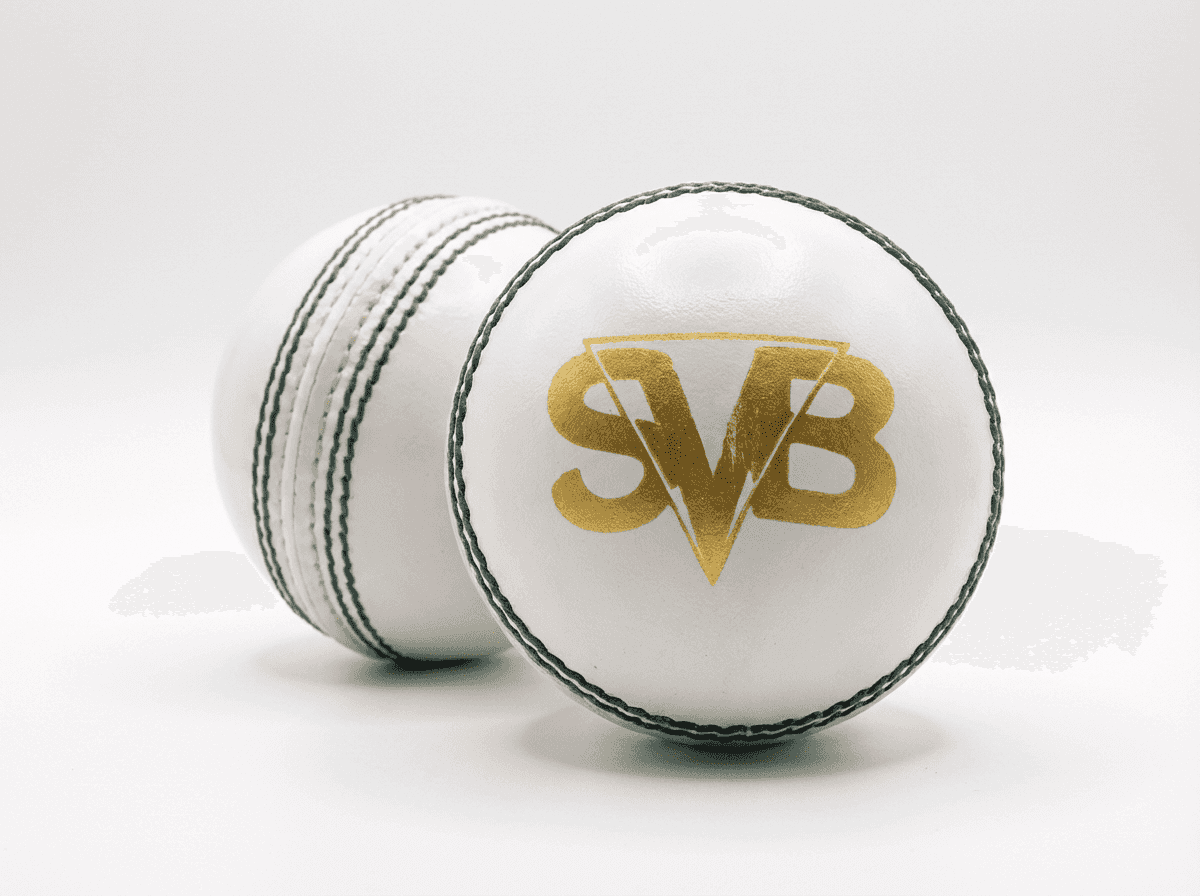
SVB Club Leather Cricket Ball
A 156g, four-piece, hand-stitched leather cricket ball designed for club cricket, season play and serious practice.

SVB Club Leather Cricket Ball
What is this product? A 156g leather cricket ball designed for club-level matches and advanced training. Who is it for? Club and league players Cricket academies Practice...
Cricket Ball Care and Storage
Correct care cannot prevent normal wear, but it can reduce avoidable damage.
After use, remove loose dirt, allow a damp ball to dry naturally and store it away from direct sunlight and excessive moisture. Do not apply oil, chemicals or artificial substances that may damage the leather or make the ball unsuitable for play.
Cricket Leather Ball Prices in India
The price of a cricket leather ball depends on its leather, core, construction, stitching, finish, brand, pack size and intended use.
Entry-level practice balls are generally more economical, while four-piece club and match balls usually cost more. Product prices can change, so buyers should compare the live price with the ball’s specifications instead of relying only on a broad price category.
Caution
Check Before You Buy
Avoid balls with loose or uneven stitching, badly formed seams, an uneven shape, visible leather damage or inconsistent balance. Colour and surface finish alone do not determine quality.
When buying a ball for an official match, confirm that its weight, size, colour and construction meet the competition requirements.
How to Check Cricket-Ball Quality
A good cricket leather ball should be judged as a complete product rather than by one visible feature.
Check whether the ball is round and evenly balanced. Examine the leather for avoidable defects and look closely at the seam and stitching. The seam should be consistent, firmly stitched and properly aligned.
The ball’s construction should also match its intended use. An economical practice ball and a match ball serve different purposes, so they should not be compared only by price.
Explore the Range
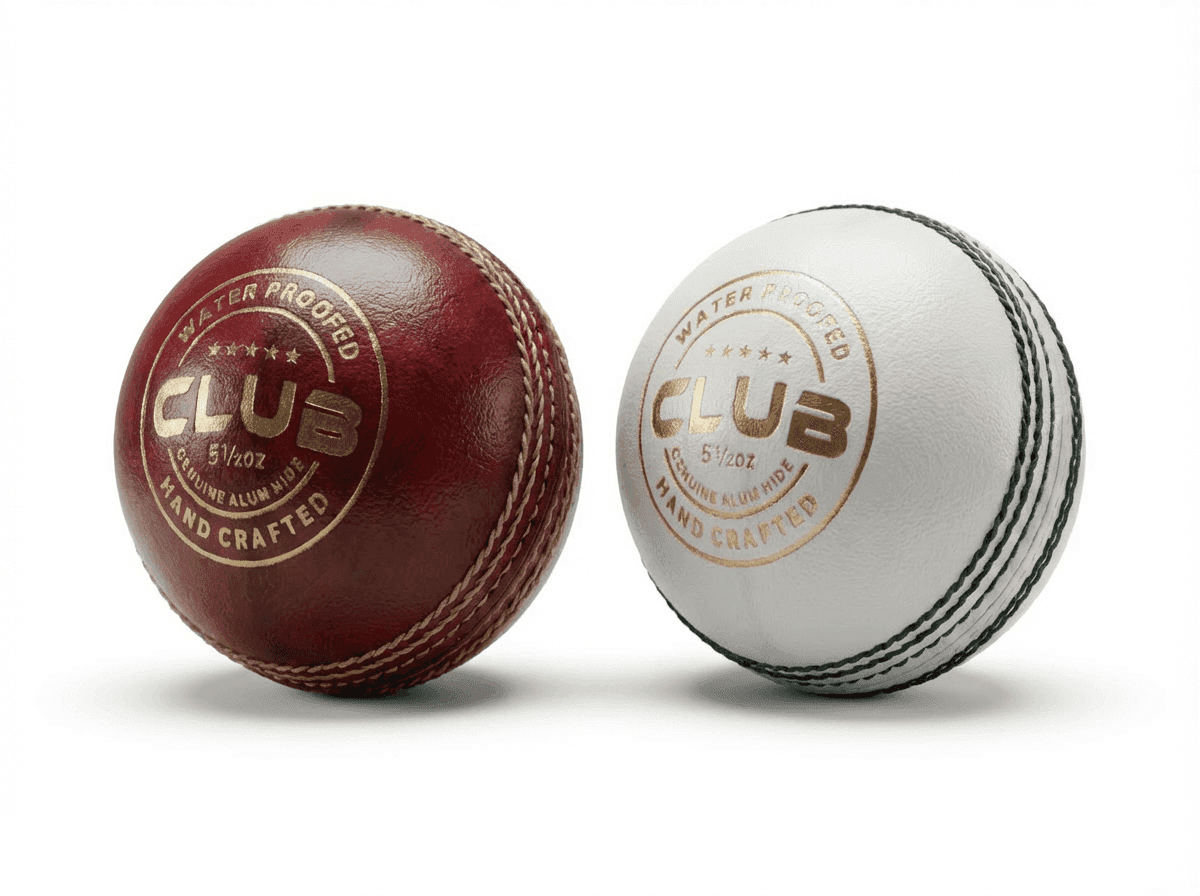
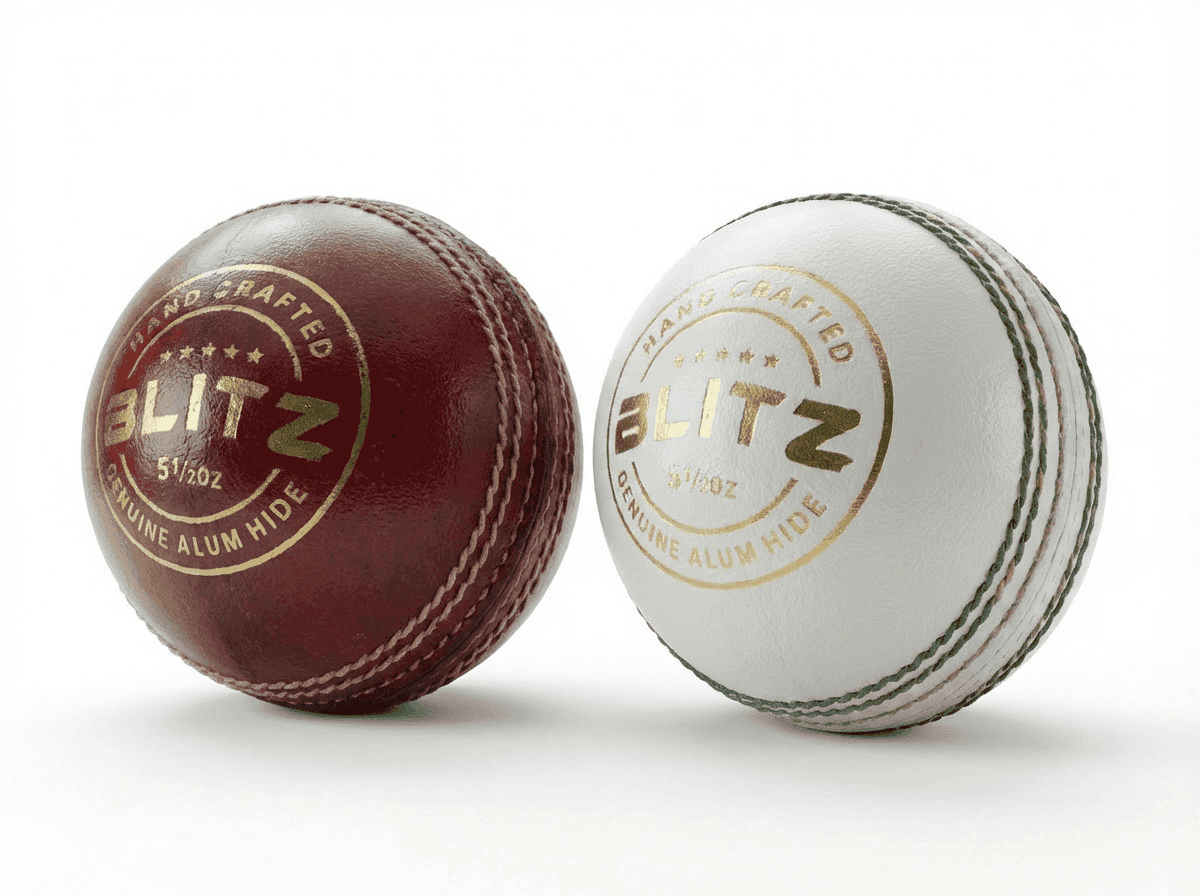
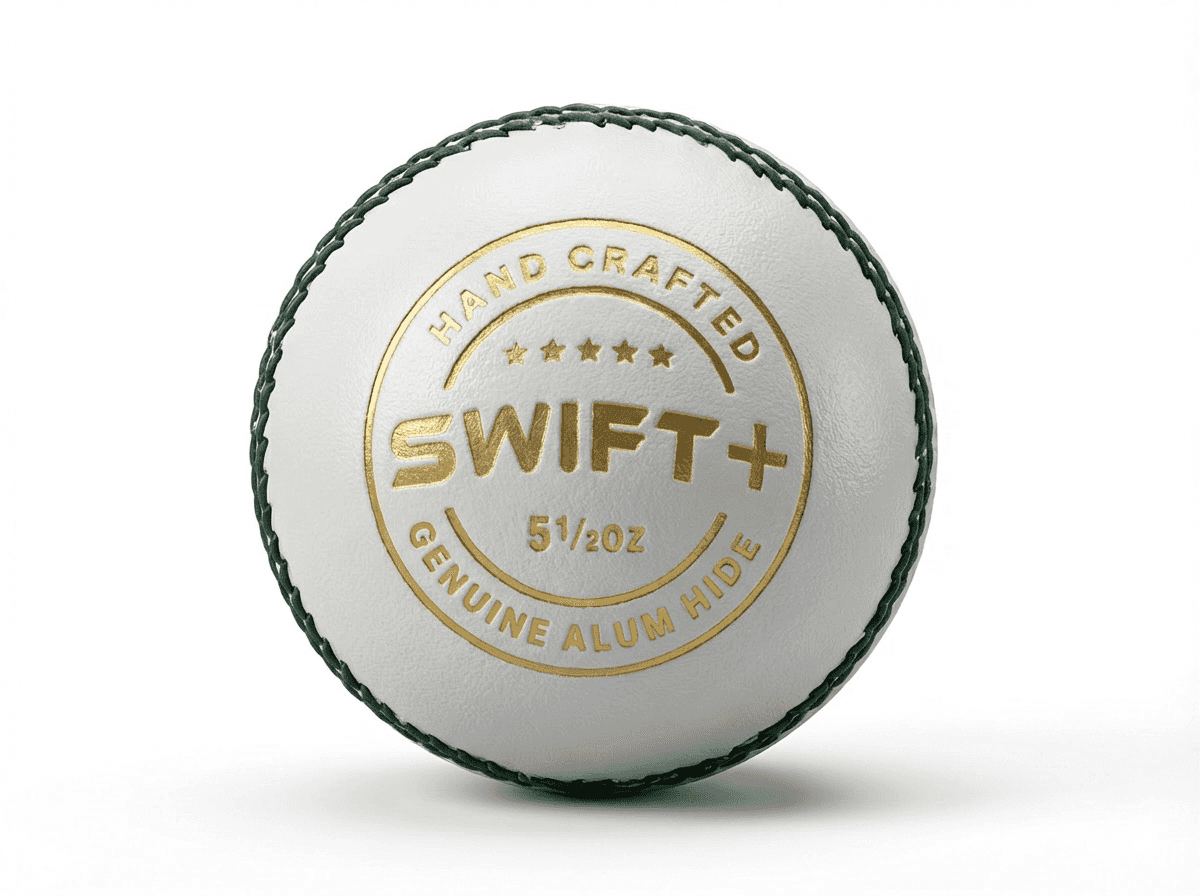
Cricket Leather Balls for Practice and Matches
Compare cricket balls by weight, colour, construction and intended use to find an appropriate option for your training or match requirements.
FAQ
Frequently Asked Questions About Cricket Leather Balls
Question 1
What is inside a cricket leather ball?
Question 1
What is inside a cricket leather ball?
Question 2
What is the official weight of a cricket ball?
Question 2
What is the official weight of a cricket ball?
Question 3
What is the difference between a two-piece and four-piece ball?
Question 3
What is the difference between a two-piece and four-piece ball?
Question 4
Which cricket leather ball is best for practice?
Question 4
Which cricket leather ball is best for practice?
Question 5
How long does a cricket leather ball last?
Question 5
How long does a cricket leather ball last?
Question 6
Why do cricket balls swing?
Question 6
Why do cricket balls swing?
Question 7
What is the difference between red, white and pink cricket balls?
Question 7
What is the difference between red, white and pink cricket balls?
Question 8
How should a leather cricket ball be stored?
Question 8
How should a leather cricket ball be stored?
Question 9
What should I check before buying a cricket leather ball?
Question 9
What should I check before buying a cricket leather ball?
Question 10
Are expensive cricket balls always better?
Question 10
Are expensive cricket balls always better?

Key Takeaways
- 1Cricket leather balls differ by colour, construction, weight and intended use.
- 2Leather, core, winding, seam and stitching all influence performance.
- 3Weight and size should match the player category and competition rules.
- 4Swing and durability depend on both construction and playing conditions.
- 5The right ball should be selected according to pitch, purpose and level of play.
Understanding these factors helps you compare cricket balls properly instead of choosing by price, colour or brand name alone.
Choose Your Ball
Choose Better, Play Better
Find a cricket leather ball suited to your playing level, pitch, training routine and match requirements.
Written by
Prashant
Prashant
Previous article
Cricket Ball Weight (Grams & kg): 156g vs 142g vs 135g
Next article
How Long Does a Cricket Ball Last? Complete Durability Guide
Tags