
Direct answer
How has the cricket ball evolved over time?
Cricket balls have evolved from locally crafted balls with varying weight, size, and bounce to standardized equipment made with carefully selected leather, stronger seams, controlled shaping, and quality testing. Many premium balls are still hand-stitched, with machines assisting in shaping and testing.
Cricket balls are more than just equipment—they represent centuries of tradition, craftsmanship, and improvement.
From early locally crafted balls to today’s carefully shaped and tested designs, the journey of the cricket ball reflects the evolution of cricket itself.
The materials at its core remain familiar—leather, cork, string, and seam—but the standards, construction methods, and quality checks have improved greatly.
🎯 Early Days: Locally Made and Inconsistent
In cricket’s early years, balls were made by local craftspeople without the consistent measurements and production standards used today.
- Leather made from animal hide was fitted around cork, tightly wound twine, or other available core materials
- Stitching quality varied between makers
- Weight, size, and shape were not always consistent
No two balls behaved exactly the same.
This variation meant:
- bowlers could not always rely on a consistent seam
- batters could face uneven bounce
- players had to adapt to the behaviour of each ball
These balls were handmade—but handmade was not the problem. The main difference was the lack of consistent specifications, shaping, and quality checks.
🧵 The Rise of Standardization and Specialist Craftsmanship
During the 18th and 19th centuries, cricket became more organized, and the specifications of the ball became more consistent.
- Leather remained the main outer material
- Hand-stitching methods became stronger and more refined
- The raised seam became more consistent
- Weight and size were brought within defined limits
- Shaping became more controlled
These improvements provided:
- fair competition
- more consistent swing and bounce
- better development of bowling techniques
Hand craftsmanship remained central—the major change was greater consistency in size, weight, stitching, and shape.
For reference, the current MCC Laws specify that a new men’s ball must weigh between 155.9 and 163 grams, rather than exactly 156 grams. MCC Law 4
| Era | Construction | Characteristics |
|---|---|---|
| Early period | Leather cover with locally made cores | Handmade, but inconsistent in size and weight |
| Standardization period | Leather, cork, string, and stronger seams | More consistent weight, shape, and bounce |
| Modern period | Selected leather, layered core, coatings, and controlled shaping | Hand craftsmanship supported by machines and quality testing |
🌍 Red vs White vs Pink: The Modern Divide
The 20th century brought format specialization—and with it, different ball types.
🔴 Red Ball
- Traditional Test match ball
- Dyed leather (color penetrates surface)
- Long-lasting, gradual wear
- Best suited for daylight cricket
⚪ White Ball
- Introduced for ODIs and T20s
- Coated with polyurethane layer
- High visibility under lights
- Loses shine and hardness faster
🩷 Pink Ball
- Designed for day-night Tests
- Multiple lacquer layers
- Enhanced visibility at dusk
- Unique swing characteristics under lights
| Ball Type | Strength | Limitation |
|---|---|---|
| Red | Durable, consistent | Less visible under lights |
| White | High visibility | Wears faster |
| Pink | Balanced visibility | Can soften unevenly |
Recommended Cricket Balls
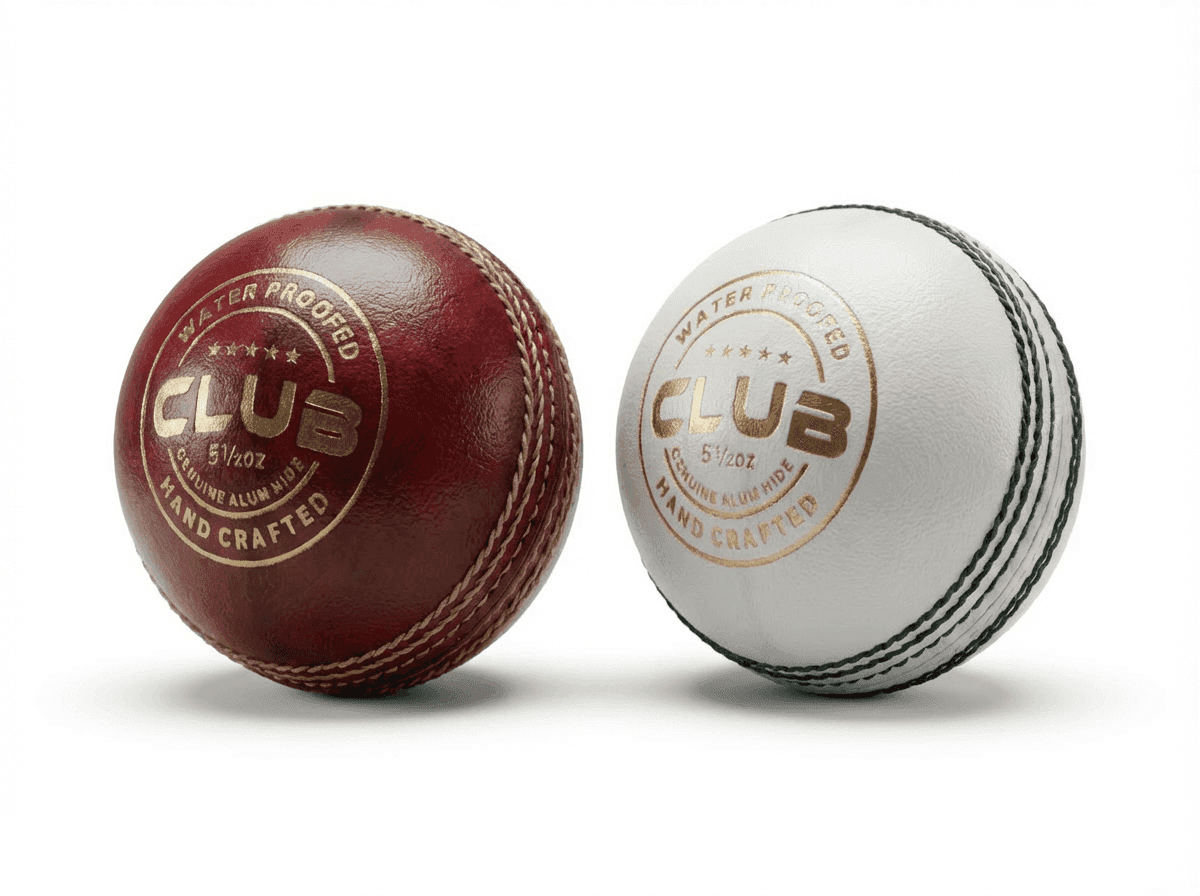
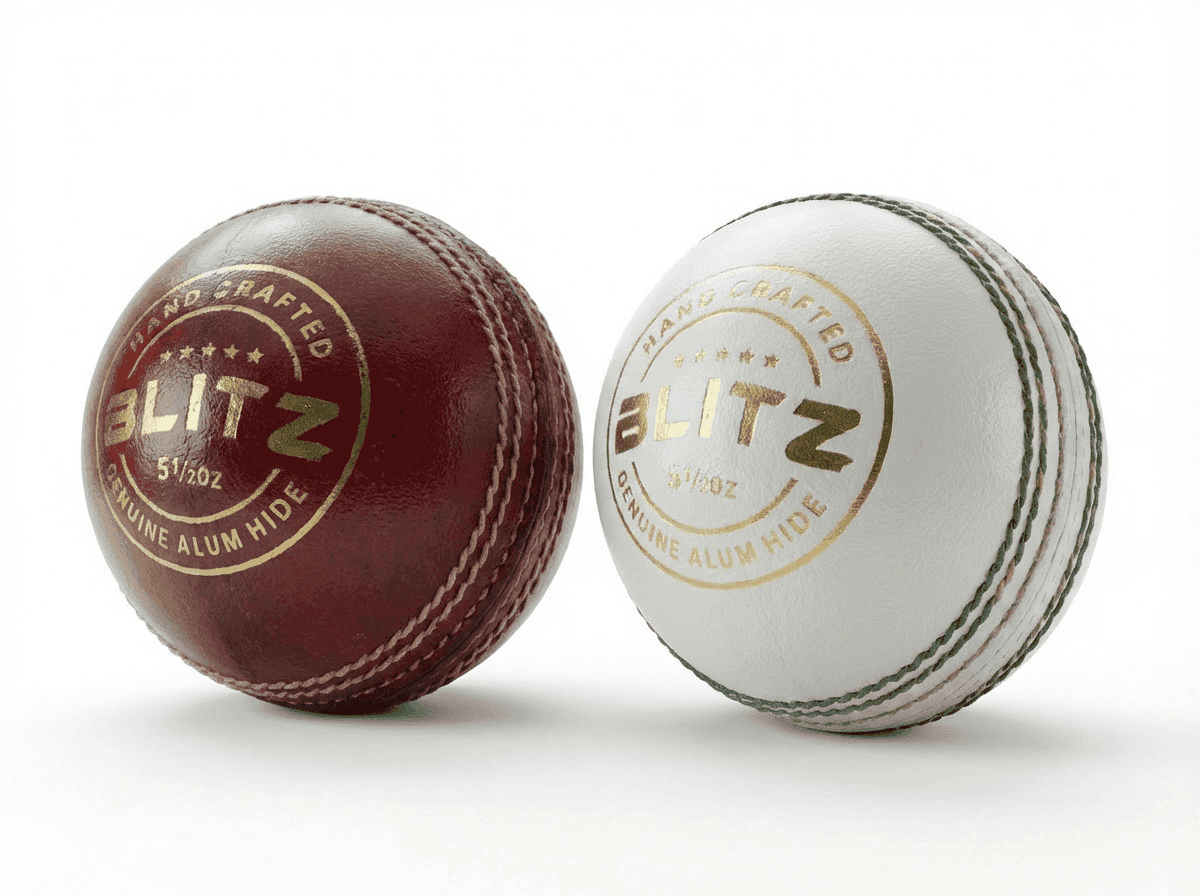
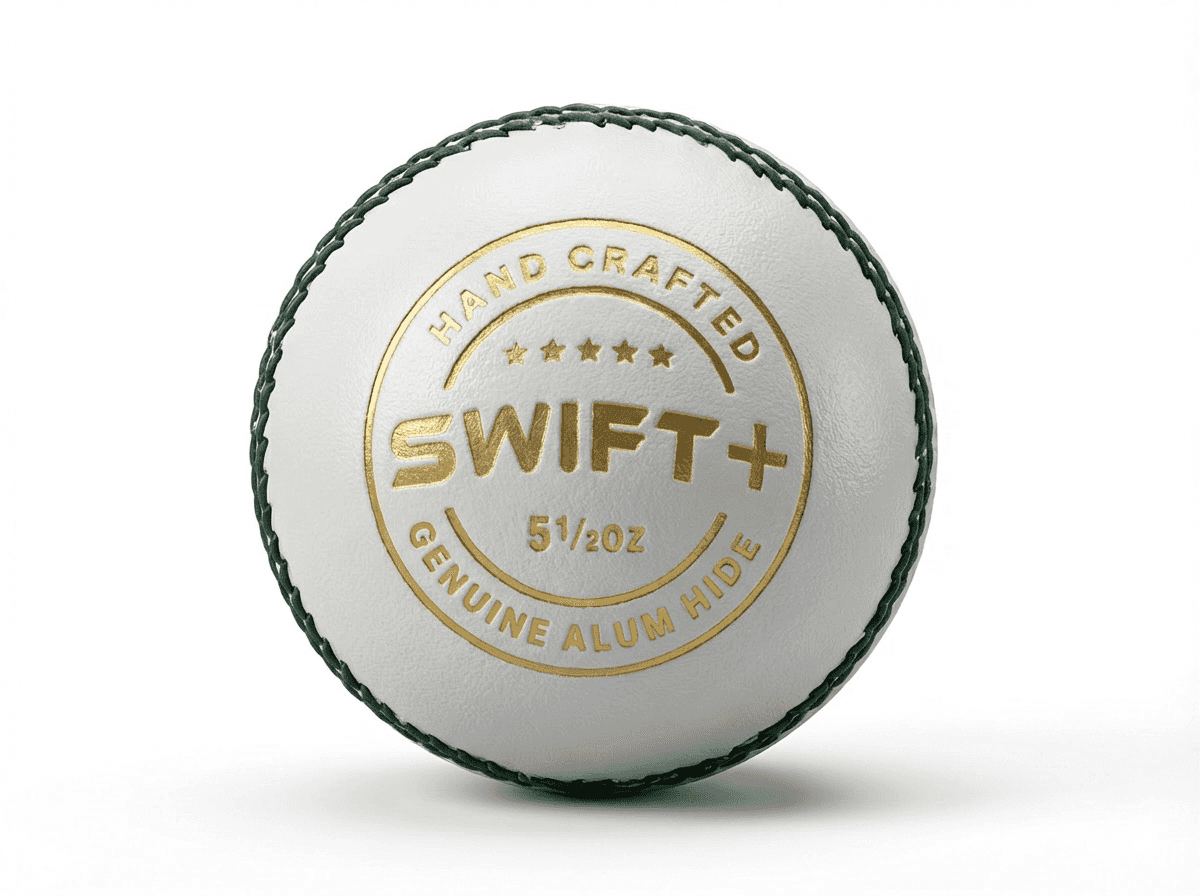
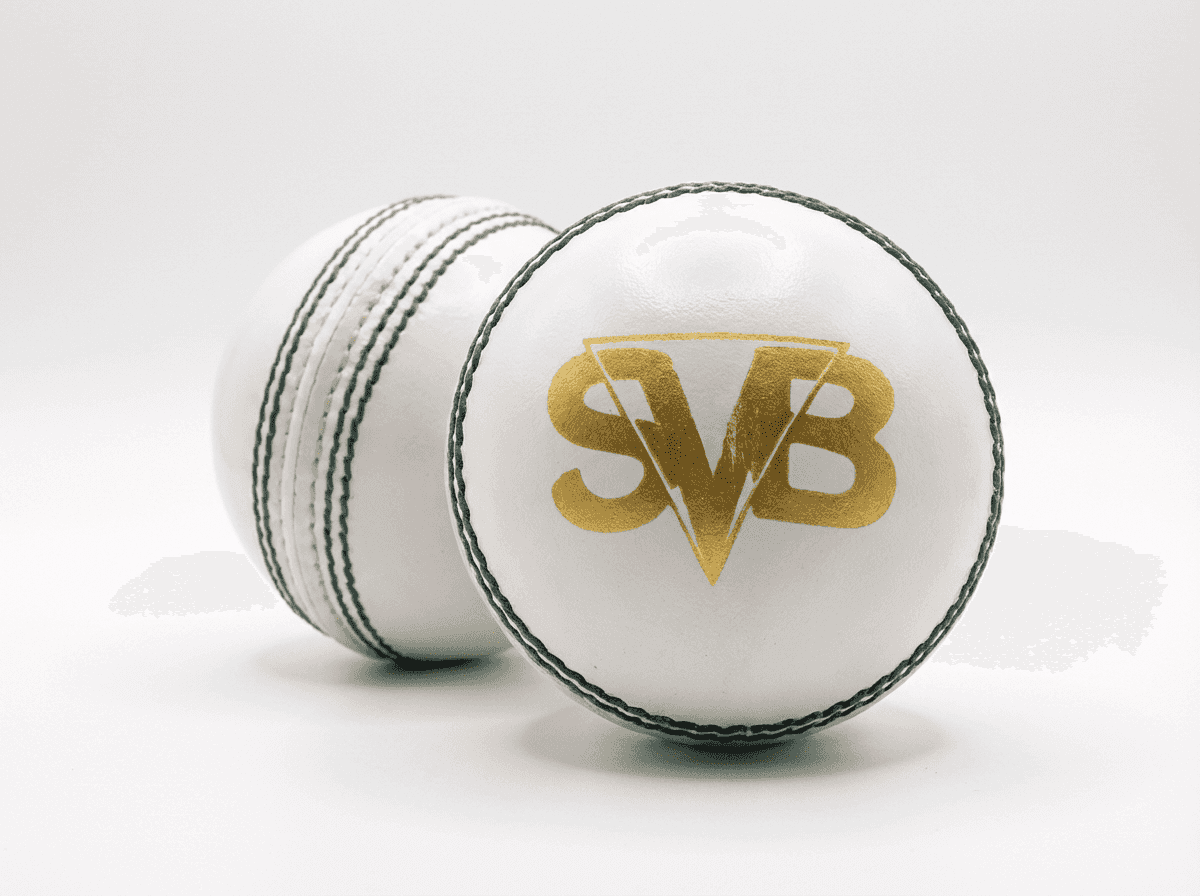
Explore Hand-Stitched Leather Cricket Balls
Discover well-made leather cricket balls with strong seams, balanced shaping, and options for practice, training, and match play.
🏭 Technology & Today’s Craftsmanship
Modern cricket balls combine traditional skills with controlled manufacturing and quality testing.
Depending on the manufacturer and grade of the ball, production may include:
- careful selection and cutting of leather
- a layered cork and string core
- controlled weight and balance
- testing of seam height, shape, and bounce
- application of polish, dye, or protective coatings
- hand-stitching of the main seam in many premium balls
Machines help create the correct shape and consistency, but they do not remove the need for skilled craftspeople.
👉 In a high-quality hand-stitched ball, the final seam is sewn by hand, while machines assist with shaping, pressing, finishing, and testing.
In many premium cricket balls, the main seam is still hand-stitched by skilled craftspeople, helping provide:
This is more accurate because stitching methods differ across manufacturers and product grades.
Why Craft Still Matters
Even when two balls use similar materials and machinery, they may not behave exactly the same.
Why?
Because:
- stitching tension can vary
- leather grain differs
- seam finishing may vary
- shaping and polishing affect the final result
This is where skilled craftsmanship can separate an average practice ball from a high-quality match ball.
Cricket continues to evolve—and so will the ball.
Possible innovations include:
- Smart balls with embedded sensors to track:
- seam position
- spin rate
- impact force
- UV-reactive coatings for enhanced night visibility
- Improved synthetic layers to extend durability
However, one thing is unlikely to change:
👉 Leather, cork, string, and the seam are likely to remain central to traditional leather cricket-ball construction, even as shaping, coatings, and testing continue to improve.
Now that you understand how cricket balls evolved, the next step is understanding how they behave in real match conditions.

FAQ
FAQ
Question 1
When was the cricket ball first standardized?
Question 1
When was the cricket ball first standardized?
Question 2
Why do red and white cricket balls behave differently?
Question 2
Why do red and white cricket balls behave differently?
Question 3
Which brands make the best cricket balls today?
Question 3
Which brands make the best cricket balls today?
Key Points:
- 1Cricket balls evolved from inconsistent local production to standardized, precision-tested equipment
- 2Consistent weight, shape, and seam construction transformed the game
- 3Different formats led to red, white, and pink ball variations
- 4Modern balls combine hand craftsmanship with machine-assisted shaping and testing
- 5Future innovations will enhance—but not replace—the core design
Cricket ball manufacturing continues to evolve, but quality leather, skilled hand-stitching, a well-formed seam, and careful shaping remain central to a high-quality ball.
Choose Your Cricket Ball
Understand the Ball, Improve Your Game
Choose a well-made leather cricket ball suited to your training, match format, and playing level.
Written by
Prashant
Prashant
Tags