Direct answer
What is the difference between a two-piece and four-piece cricket ball?
A two-piece cricket ball has an outer cover made from two shaped leather sections, while a four-piece ball uses four. Two-piece balls are commonly chosen for affordable regular practice, whereas four-piece balls are generally preferred for advanced training and matches. However, actual quality also depends on the leather, core, winding, stitching, seam, finish and manufacturing consistency.
Key facts
- A two-piece ball uses two shaped leather cover sections
- A four-piece ball uses four sections arranged as two joined leather cups
- Two-piece balls are commonly used for affordable regular practice
- Four-piece construction is commonly selected for advanced practice and matches
The terms “two-piece” and “four-piece” describe the number of shaped leather sections used to form a cricket ball’s outer cover. They do not refer to the number of layers inside the ball or necessarily indicate whether its main seam is stitched by hand or machine.
In a two-piece ball, two large leather sections are shaped into cups and fitted around the wound core. These cups are joined at the main seam.
A four-piece ball contains four leather sections. Two sections are joined to make each cup, creating two additional quarter seams. The completed cups are then fitted around the core and connected at the main seam.
Four-piece balls are commonly manufactured for higher-level cricket because this construction can support controlled shaping and a traditional match-style cover. Two-piece balls generally cost less to produce and can be suitable for regular training. Actual performance still depends on the leather, core, winding, stitching, finish, balance and manufacturing consistency.
A four-piece ball is not automatically excellent, and a two-piece ball is not automatically poor.
A well-made two-piece practice ball can be more suitable for repeated net sessions than an inexpensive, inconsistently manufactured four-piece ball. Similarly, a carefully constructed four-piece ball may provide the shape, seam and playing characteristics required for club or match cricket.
The correct comparison is therefore not simply:
Two pieces versus four pieces
It should be:
Construction, materials, manufacturing quality and intended use
In this article16 sections
How is a two-piece cricket ball constructed?
A two-piece cricket ball uses two shaped sections of leather to form its outer cover.
Each section is moulded into a curved cup. The two cups are placed around the prepared core and joined along the ball’s main seam. Because the cover uses only two sections, it does not have the two additional quarter seams found on a traditional four-piece ball.
Two-piece construction is commonly used for practice balls because it requires fewer leather sections and fewer cover-joining operations. This can help manufacturers produce a more affordable ball for schools, beginners, coaching and repeated net sessions.
The core, winding and cover must still be balanced and shaped correctly. Two-piece construction alone does not guarantee that a ball will retain its roundness or withstand a particular number of overs.
How is a four-piece cricket ball constructed?
A four-piece ball uses four shaped leather sections to form its outer cover.
Two leather sections are joined to create one cup, and the other two form the opposite cup. These joins create the two quarter seams visible on opposite sides of the ball.
The two completed cups are fitted around the wound core and connected by the raised main seam. The quarter seams and main seam form the traditional cover arrangement associated with many club, match and premium cricket balls.
Four-piece construction requires accurate leather selection, cutting, shaping and joining. Unequal sections or inconsistent leather thickness can affect the completed ball’s balance and roundness.
| Feature | Two-piece ball | Four-piece ball |
|---|---|---|
| Outer cover | Two shaped leather sections | Four shaped leather sections |
| Cover arrangement | Two cups joined at the main seam | Two joined sections form each cup, followed by the main seam |
| Quarter seams | Not present | Two quarter seams |
| Common use | Beginners, schools and repeated practice | Advanced practice, clubs and matches |
| Typical price position | Generally more affordable | Generally more expensive |
| Manufacturing complexity | Fewer cover sections and joins | More cutting, shaping and joining operations |
| Match-style construction | Less commonly selected | Commonly selected |
| Quality level | Can range from poor to well-made | Can also range from poor to premium |
These are common differences, not universal guarantees. Individual ball specifications and manufacturing quality can vary.
Does a four-piece ball swing more?
Four-piece construction is commonly associated with higher-grade cricket balls designed for match-style performance. Recognised manufacturers also use four-piece construction in balls intended to retain shape and support movement.
However, the number of leather pieces cannot independently guarantee swing.
Swing is affected by several connected factors:
- Seam position and stability
- Surface condition
- Difference between the two sides of the ball
- Leather and finish
- Bowling speed
- Wrist position and release
- Weather and airflow
- Manufacturing balance
A poorly balanced four-piece ball with uneven stitching may behave less consistently than a properly manufactured two-piece ball. Construction should therefore be considered alongside the complete specification.
Is a four-piece ball always more durable?
Not necessarily.
Four-piece balls are frequently made for longer or higher-level use, so they may also receive better leather, winding, stitching and finishing. This can make the overall product more durable, but the result cannot be attributed solely to the number of leather sections.
Playing life also depends on:
- Leather grade and thickness
- Core quality
- Tightness and consistency of winding
- Stitching strength
- Surface finish
- Pitch abrasiveness
- Moisture
- Playing intensity
- Care and storage
A strong two-piece practice ball may be the better-value option for frequent training on a rough surface. A four-piece ball may be more appropriate when match-style construction and performance are the priority.
Does two-piece or four-piece determine the stitching method?
No. The number of leather pieces and the stitching method describe different characteristics.
Two-piece or four-piece describes the construction of the outer leather cover.
Hand-stitched or machine-stitched describes how relevant seams are completed during manufacturing.
A two-piece ball may be machine-stitched or made using another specified manufacturing method. Four-piece balls can also vary in how their seams are assembled and finished.
Do not assume that every four-piece ball is completely hand-stitched. Check the individual product specification for:
- Number of leather pieces
- Main-seam stitching method
- Leather specification
- Weight
- Intended use
- Playing level
Caution
Four-piece does not automatically mean match quality
The words “four-piece” only describe the arrangement of the leather cover.
Before treating a ball as suitable for a match, also check its weight, circumference, leather, core, winding, stitching, seam, roundness, balance and intended playing use.
Tournament and association requirements can differ. Confirm the applicable competition rules before purchasing match balls.
Which cricket ball should beginners and schools choose?
A two-piece leather ball can be appropriate when the main requirements are:
- Affordable regular practice
- Repeated school or coaching sessions
- Introduction to leather-ball cricket
- Practice where match-level construction is unnecessary
- Purchasing several balls within a fixed budget
The ball should still have the correct weight for the player category and be suitable for the intended surface.
Beginners do not automatically require the cheapest available ball. A badly shaped or unbalanced ball can provide an inconsistent training experience. Check its seam, roundness, balance and stated playing use before buying.
When should you choose a four-piece ball?
Consider a four-piece ball when it is required for:
- Advanced academy training
- Club practice
- Match simulation
- Competitive cricket
- Longer playing sessions
- Players accustomed to traditional match-style construction
The intended competition may have its own ball requirements. A four-piece label does not by itself confirm eligibility or approval for a particular match.
When comparing four-piece balls, examine the complete product specification and choose the grade appropriate for your playing level and budget.
| Playing requirement | Commonly suitable construction | Why |
|---|---|---|
| Beginner leather-ball practice | Two-piece | Affordable introduction to regular practice |
| School and coaching sessions | Two-piece or entry-level four-piece | Depends on budget and training standard |
| Frequent practice on rough surfaces | Durable practice-grade ball | Complete durability specification matters more than piece count alone |
| Academy and advanced training | Four-piece | Provides a more traditional match-style construction |
| Club practice and match simulation | Four-piece | Commonly selected for higher-level preparation |
| Competitive matches | Competition-appropriate four-piece ball | Confirm the applicable rules and approved specification |
The final selection should also consider weight, surface, competition rules and the individual ball specification.
Affordable regular practice
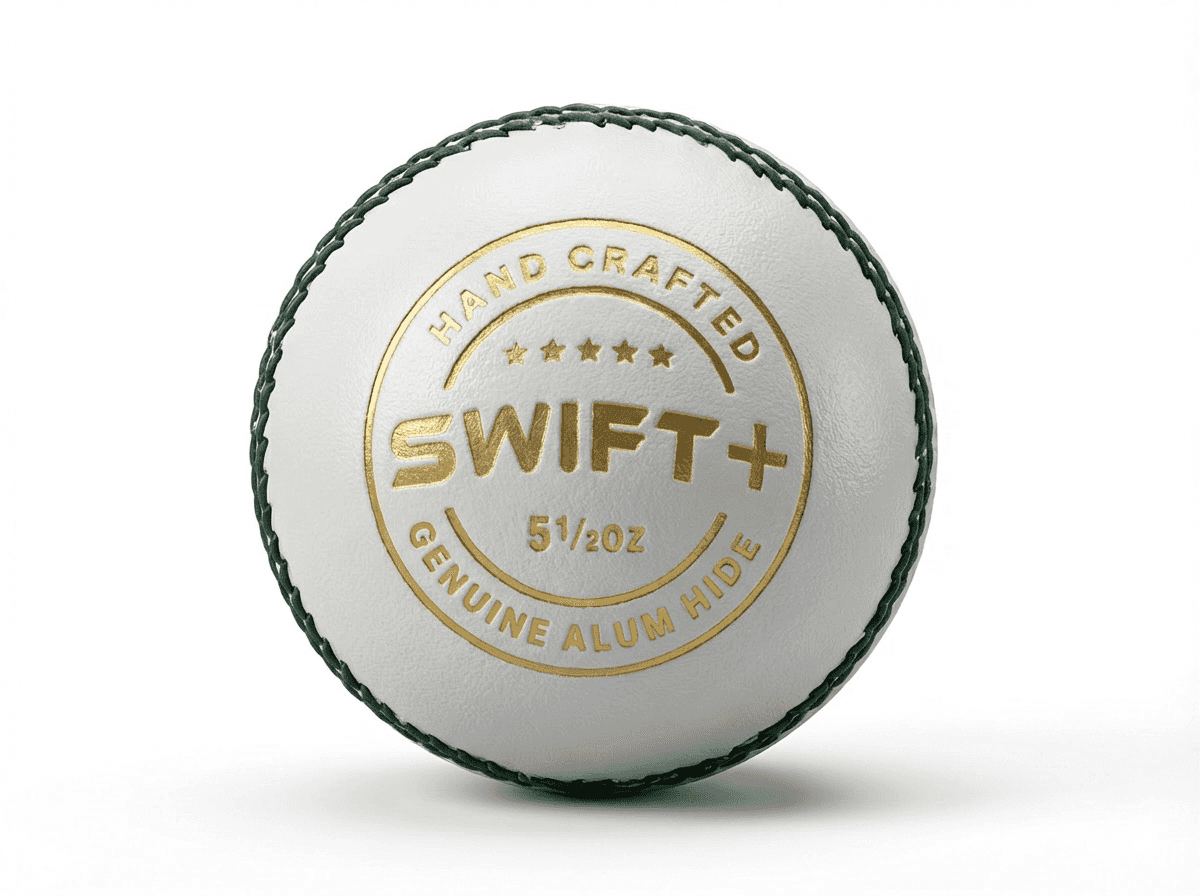
SVB Swift+ Two-Piece Leather Cricket Ball
A 156g two-piece leather cricket ball designed for beginners, schools, coaching and regular practice where affordability and repeated use are important.

SVB Swift+ लेदर क्रिकेट बॉल
स्कूल क्रिकेट, कोचिंग, शुरुआती खिलाड़ियों और नियमित अभ्यास के लिए किफायती 156 ग्राम की 2-पीस, मशीन से सिली लेदर क्रिकेट गेंद।
Compare both constructions
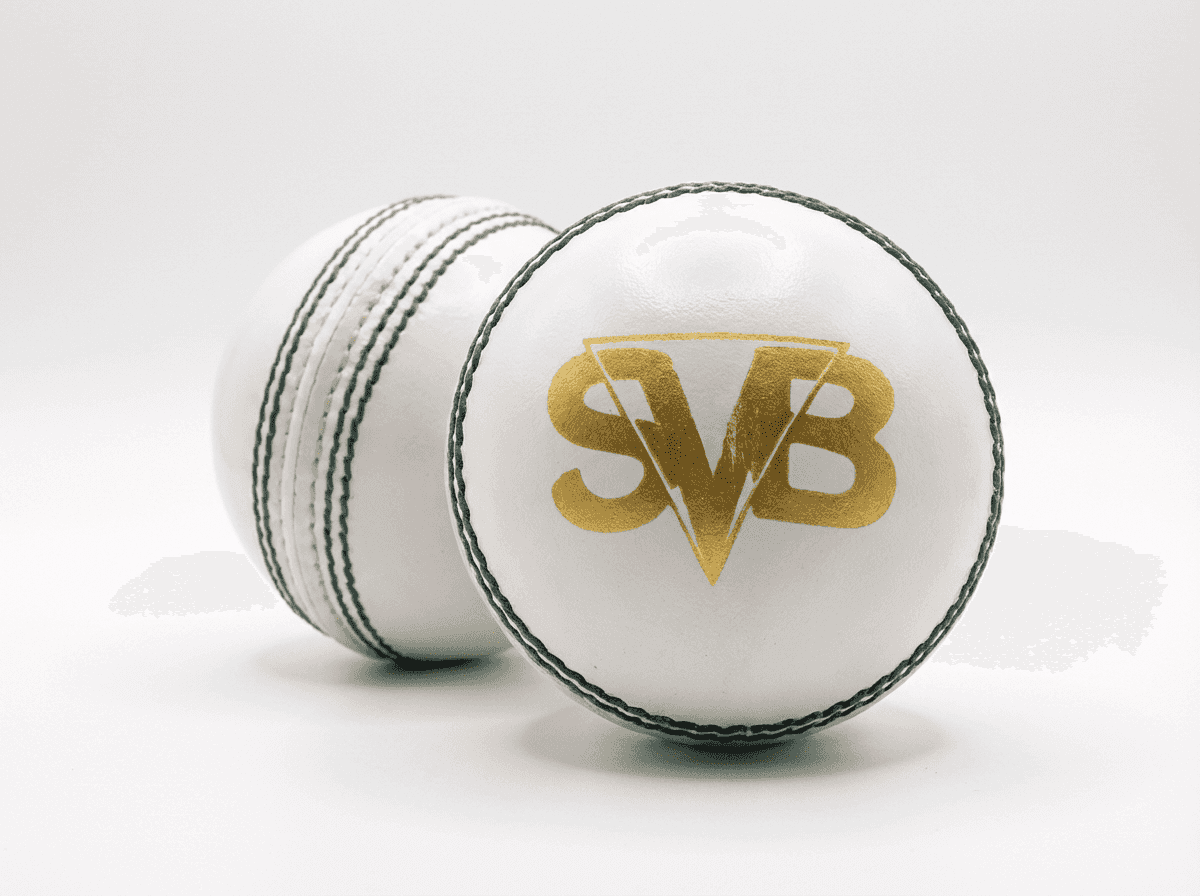
Explore SVB Leather Cricket Balls
Compare SVB two-piece and four-piece leather cricket balls by weight, stitching, seam, playing use, colour and pack size.
How SVB Sports selects the construction for each ball
SVB Sports manufactures two-piece and four-piece leather cricket balls in Meerut for different playing requirements.
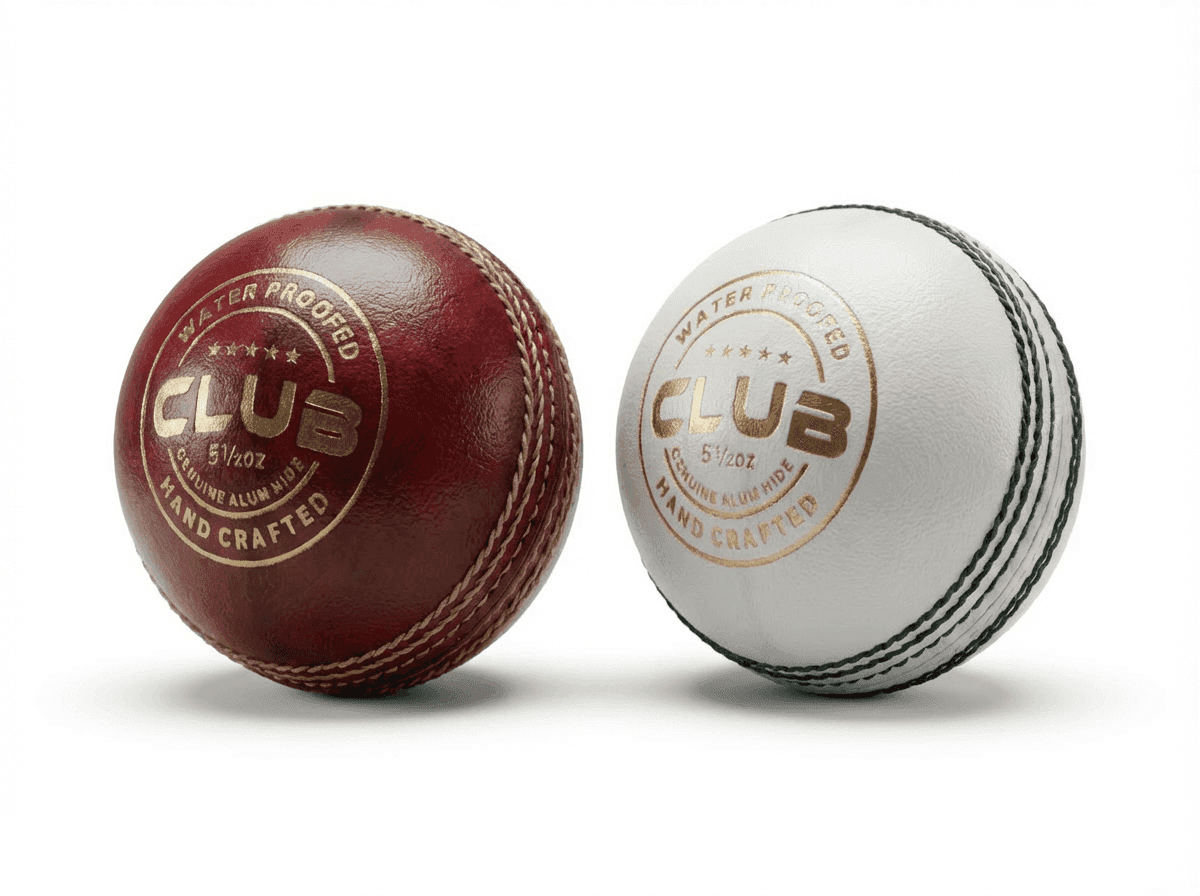
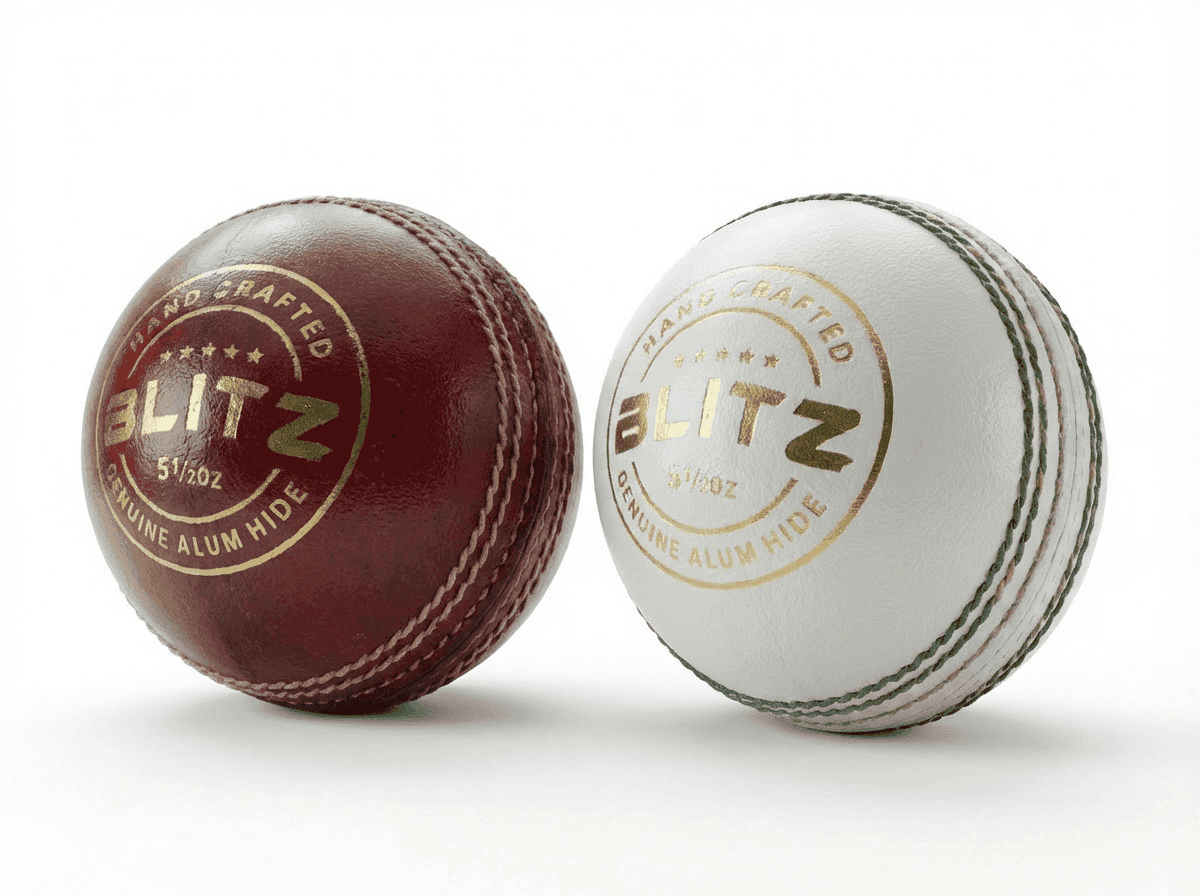
The SVB Swift+ uses a two-piece construction for affordable regular practice. SVB Blitz, Club and Test balls use four-piece construction for progressively higher levels of training, club cricket and match play.
Construction is only one part of each product specification. During manufacturing, attention must also be given to:
- Core preparation
- Thread winding
- Leather selection
- Cutting and moulding
- Stitching
- Seam formation
- Weight
- Roundness
- Balance
- Surface finish
This is why two balls with the same piece count can still differ in price, playing use and overall quality.

Key Takeaways
- 1Two-piece and four-piece describe the number of leather sections in the outer cover.
- 2Two-piece balls are commonly selected for affordable, repeated practice.
- 3Four-piece balls are commonly selected for advanced training, club cricket and matches.
- 4Piece count does not independently guarantee swing, durability or quality.
- 5Leather, core, winding, stitching, seam, finish, roundness and balance must also be considered.
Choose the ball according to its complete specification and intended use. A well-made two-piece practice ball can be more appropriate than a low-quality four-piece ball, while a properly constructed four-piece ball is generally better suited to match-style cricket.
FAQ
Questions About Two-Piece and Four-Piece Cricket Balls
Question 1
What is a two-piece cricket ball?
Question 1
What is a two-piece cricket ball?
A two-piece cricket ball has an outer cover formed from two shaped sections of leather. The sections create two cups that are fitted around the wound core and joined at the main seam.
Question 2
What is a four-piece cricket ball?
Question 2
What is a four-piece cricket ball?
A four-piece cricket ball uses four shaped leather sections. Two sections are joined to create each cup, producing two quarter seams. The completed cups are fitted around the core and connected at the main seam.
Question 3
Which is better: a two-piece or four-piece cricket ball?
Question 3
Which is better: a two-piece or four-piece cricket ball?
Neither construction is universally better for every purpose. Two-piece balls are commonly suitable for affordable regular practice, while four-piece balls are generally selected for advanced training and matches. Actual quality depends on the complete construction.
Question 4
Is a four-piece cricket ball suitable for matches?
Question 4
Is a four-piece cricket ball suitable for matches?
Four-piece balls are commonly used for club and match cricket, but the label alone does not confirm match suitability. Check the product’s weight, circumference, stitching, intended use and applicable competition rules.
Question 5
Is a two-piece cricket ball suitable for practice?
Question 5
Is a two-piece cricket ball suitable for practice?
Yes. A properly manufactured two-piece leather ball can be suitable for beginners, schools, coaching and repeated practice. Choose the correct weight and a ball intended for the playing surface.
Question 6
Does a four-piece ball swing more than a two-piece ball?
Question 6
Does a four-piece ball swing more than a two-piece ball?
Four-piece construction is commonly used in balls designed for match-style movement, but swing is not determined by piece count alone. Seam stability, surface condition, leather, finish, bowling speed, release and weather also affect swing.
Question 7
Is every four-piece ball hand-stitched?
Question 7
Is every four-piece ball hand-stitched?
No. Piece count and stitching method are separate specifications. Check whether the individual product is described as hand-stitched or machine-stitched rather than assuming from its four-piece construction.
Question 8
Does a four-piece ball last longer?
Question 8
Does a four-piece ball last longer?
Not automatically. Many four-piece balls use higher-grade materials because they are intended for advanced cricket, but durability also depends on the leather, core, winding, stitching, pitch, weather, care and intensity of use.
Question 9
Why are four-piece cricket balls generally more expensive?
Question 9
Why are four-piece cricket balls generally more expensive?
Their construction requires additional leather sections, accurate cutting, shaping and joining. Many four-piece balls are also produced with specifications intended for higher-level cricket, which can increase their price.
Question 10
What should I check besides two-piece or four-piece construction?
Question 10
What should I check besides two-piece or four-piece construction?
Check the ball’s weight, player category, leather, core, winding, stitching, seam, roundness, balance, surface finish, intended use and competition requirements.
Written by
SVB Sports
Author at SVB Sports
Tags